

Skin Rejuvenation
Today, skin rejuvenation and skin resurfacing treatments have become an integral part of cosmetic procedures. Whereas in the past, fully ablative lasers were primarily used, we now see that fractional laser treatments have become increasingly popular. These treatments allow you to even more effectively avoid (longer) downtime and the risk of complications (as seen with fully ablative treatments).
There is now a wider variety of treatments available for this indication, including invasive treatments such as (fractional) ablative lasers and less invasive treatments, such as non-ablative lasers. A variety of wavelengths offers practitioners and patients a wide range of options in terms of effectiveness, safety, and, consequently, satisfaction.
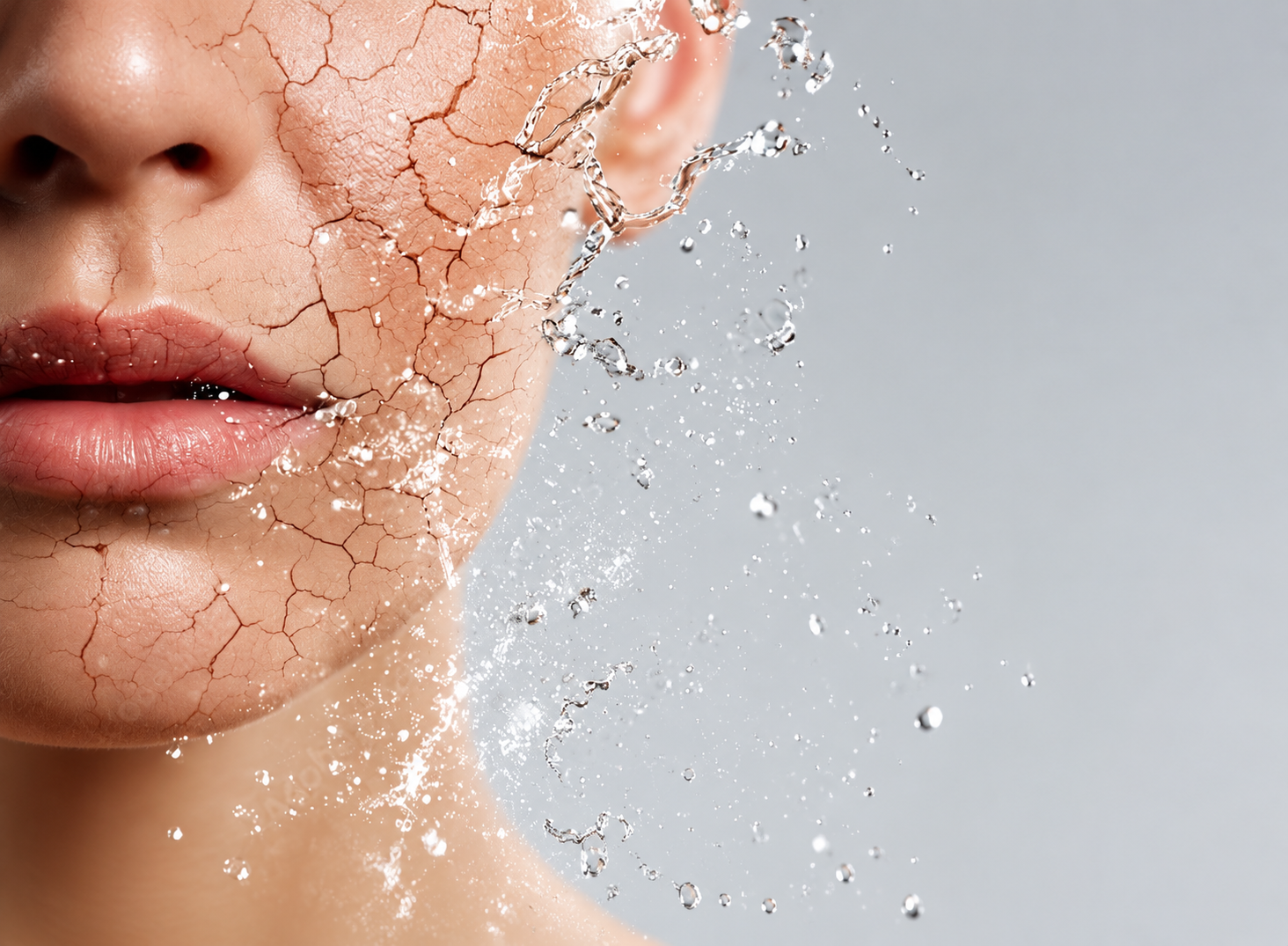
What is skin rejuvenation?
Rejuvenation, or skin rejuvenation, is essentially a broad term, but in this context it primarily refers to the treatment of fine lines and wrinkles, coarse skin texture, sagging, scars, enlarged pores, and superficial skin imperfections. Pigmentation spots are also an increasingly common concern.
When the goal of treatment is skin rejuvenation, water acts as the chromophore. The wavelengths must therefore be absorbed by water. Only then can we speak of skin rejuvenation.
During the treatment, selective and controlled damage is inflicted on one or more layers of the skin. Heat is generated in the skin, stimulating the production of new collagen and elastin. Depending on the wavelength used, this process is referred to as tissue coagulation, vaporization, or carbonization. The skin’s texture becomes finer and more even, and fine lines and wrinkles improve significantly. In addition, the skin tightens, making it look and feel younger.
Skin rejuvenation systems
Examples
of
ablative lasers include the CO2 laser (10,600 nm) and the Er:YAG laser (2,940 nm). Whereas a CO₂ laser produces relatively little ablation but a great deal of coagulation, the Er:YAG laser produces relatively high levels of ablation and minimal coagulation.
The Er:Glass laser (1,540 nm) and the 1,440 nm laser are the most commonly used wavelengths among non-ablative lasers.
For a mild skin rejuvenation treatment—which focuses on reducing fine lines, (mild) acne scars, and enlarged pores, as well as refreshing the skin—a very short pulse from the Nd:YAG laser is the solution. For this, the pulse must be shorter than 1 ms and there must be sufficient energy to heat the skin. This heat will stimulate collagen production.
When we talk about an even shorter pulse (duration), we are in the nano- or even picosecond range: the so-called Q-switched and picosecond lasers. These lasers are also highly suitable for skin rejuvenation.
To make an informed decision about which wavelengths are best suited for your practice, it is important to be well-informed about the differences and what this can mean for patients.
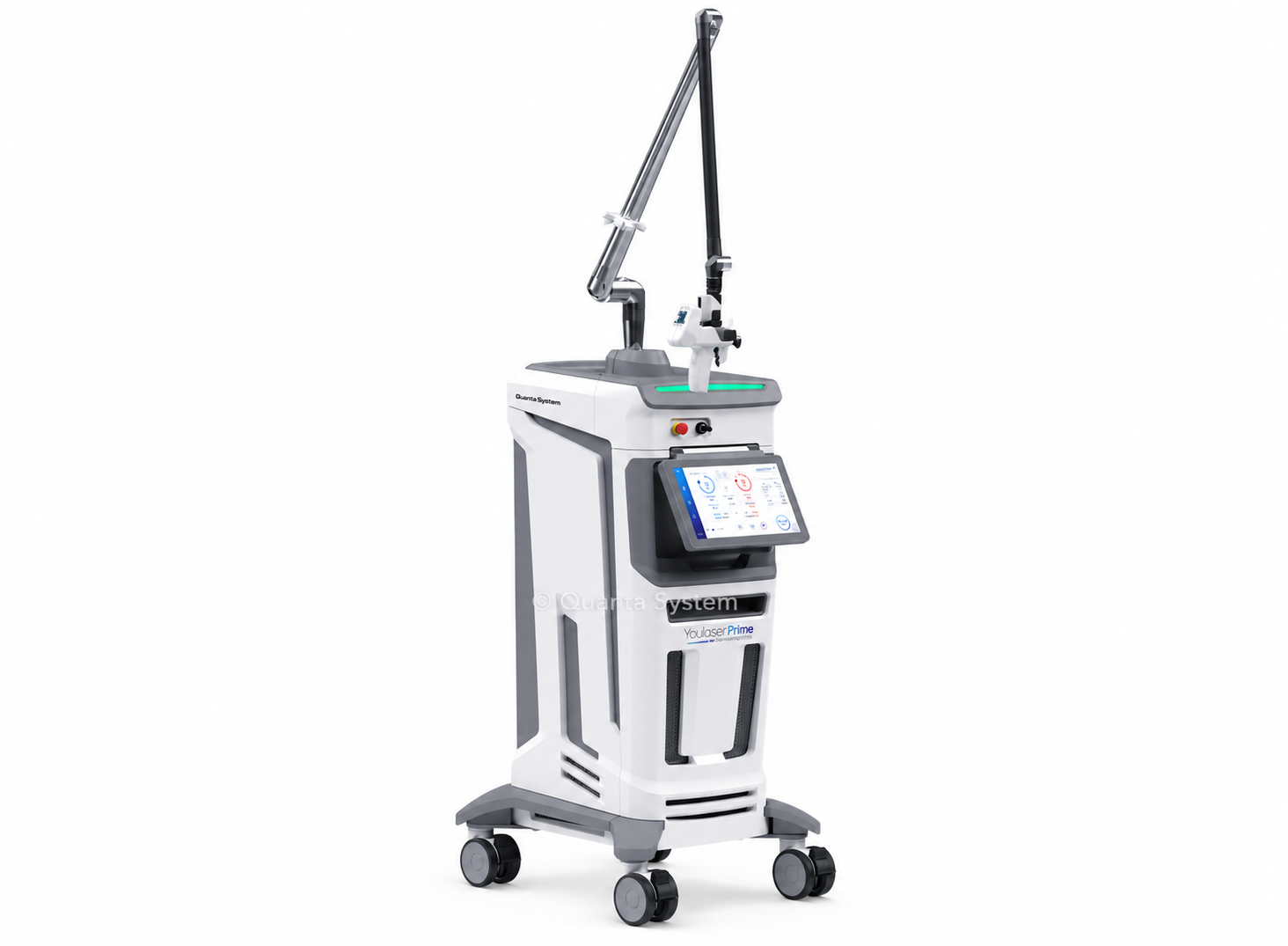
Ablative lasers are more effective than non-ablative lasers for improving coarse skin texture and wrinkles; however, they cause more damage and therefore result in longer downtime. A non-ablative laser, on the other hand, stimulates more collagen production, which makes it highly suitable for treating sagging skin and acne scars, for example. The best results are achieved by combining both wavelengths. There are various options available for this, such as with the Quanta System Youlaser Prime MT.
Here, the ablative CO2 laser is combined with the non-ablative Erbium:Glass laser (1540 nm/1550 nm)
The wavelengths listed above, with the exception of Q-switched and picosecond lasers, operate on the basis of a photothermal effect. Due to this heat generation, non-ablative lasers cause tissue coagulation, usually deeper within the skin. A temperature increase of <100 degrees occurs. With ablative lasers, coagulation also occurs, but to a lesser extent. Here, you primarily see ablation/vaporization at the surface.
Whereas fully ablative laser treatments were commonly used in the past, we have seen a significant increase in the use of fractional treatments in recent years. Fractional treatment involves creating numerous tiny columns of tissue damage, leaving part of the skin intact. A major advantage of this approach is that it reduces the risk of side effects and complications. It also significantly reduces downtime. However, it is important to carefully consider the treatment settings, such as pulse duration, fluence, wattage, stacks, passes, and the density of the damage columns.
The pulse duration is the time during which a certain amount of energy is delivered. As indicated above, we refer to ms/ns/ps. While millisecond lasers involve a photothermal effect, nano- and picosecond lasers involve photoacoustic effects. In this case, the process does not rely on direct heat generation, but rather creates an explosion within the cell. Picosecond lasers are the newest and most innovative in this field.
Fractional Treatment
When discussing fractional treatments, several factors are important.
First and foremost, the density and the number of passes you perform. This determines the number of “damage” columns you create: the higher the density and the more passes, the more intensive the treatment.
Furthermore, the fluence—the number of joules per cm²—and the number of stacks are also important, as these determine the penetration depth.
The difference in the effect on and within the tissue between ablative and non-ablative lasers:
Ablative: absorption in water – temperature increase >100 degrees – vaporization – increased pressure – localized micro-explosions.
Non-ablative: absorption in water – temperature increase <100 degrees – coagulation – protein denaturation – micro-necrotic zone.
Depending on the selected wavelength and the system, the practitioner will use either a scanner or a lens. Fractional CO2 lasers use a scanner. Depending on the system’s capabilities, the scanner can be configured in a wide variety of ways. This includes the type of pattern being scanned, the diversity and size of the shapes, speed, and density. With a lens, on the other hand, the practitioner works with a fixed pattern. Non-ablative lasers using a lens allow for faster treatment, but offer less flexibility in terms of settings. With this method, it is only possible to adjust the pulse duration and fluence.
To reach the right clinical decision, a careful assessment must be made:
- Wavelength type: non-ablative/ablative
- Fractional/non-fractional
- Pulse duration/Fluence
- Density
- Number of passes
- Stacking/no stacking
The clinical endpoint for non-ablative treatments should be redness and edema. For ablative lasers, white/brown/yellowish discoloration, erythema, and possibly pinpoint hemorrhages and carbonization are desirable effects.
Effective treatment depends entirely on the quality of the laser, the ability to think clinically, and acting accordingly. Finally, proper patient selection also plays a major role.
Frequently Asked Questions About Skin Rejuvenation
The goal of laser treatment for this condition is to rejuvenate the skin from the inside out.
Using a concentrated beam of light, the laser creates tiny, controlled “holes” or columns of heat in the deeper layers of the skin without damaging the surrounding skin. This natural wound-healing process activates the fibroblasts, which immediately begin producing new collagen and elastin. The result is skin that is tighter and/or smoother, along with an improvement in pigmentation spots and scars.
We have the following systems available for performing skin rejuvenation treatments:
(Click on the system to learn more about the capabilities of the respective laser)
Quanta System Youlaser (Prime) MT
Quanta System Discovery PICO Plus
Quanta System Chrome
Quanta System Q-Plus C EVO
Quanta System Twain 2940
Want to learn more about skin rejuvenation?
Feel free to contact us if you have any questions about the options for skin rejuvenation.
We’d be happy to help you explore your options!